Battle of Graham’s Town continued…


PART  III of III

Evaluation of the battle

From the amaNdlambe point of view, attacking the British military headquarters made strategic good sense. In the bigger picture of the Fifth Frontier War, it is also quite possible that the attack was conceived as a pre-emptive strike occasioned by the build-up of colonial forces as the war had been going on at a relatively low-key level for some months. Had they been able to obliterate the British garrison at Graham’s Town, the eastern Cape would have been open to invasion as far west as George and perhaps beyond.  It is at the tactical level however that the amaNdlambe endeavour failed. This was the one opportunity they and their allies had of politically and militarily dominating the area. The major question begging to be answered is: why, notwithstanding the technological disparity in weaponry, the amaNdlambe with a numerical advantage of 18;1 lost the battle weighed so heavily in their favour. The reasons for this are complex.

While superior weaponry is an important factor, it is not the only one deciding the outcome of battles: superior weaponry has not always won battles and it is a simplistic and ill-informed response to attribute the amaNdlambe lack of success in Graham’s Town to this single factor.  While there may well have been cultural and social considerations, some very questionable decisions (arguably even blunders) were made by the attackers.  Looked at from a dispassionate point of view, the amaNdlambe leadership made three significant errors of judgment, which in turn led to poor military decisions and, arguably, unnecessary loss of life in the field.

  • Firstly, the delay of nearly two hours in attacking once the trap had been sprung thus allowing the defenders adequate time to organise and prepare themselves. Had the amaNdlambe attacked immediately they had reached the ridge to the east of the settlement, they would, as indicated by both Willshire and Fraser, have found the British relatively unprepared. This may well have been a crucial point in determining the outcome.
  • Secondly, it must be asked, why were there no attempts to surround the town and subject it to a multi-pronged attack. The amaNdlambe had the numbers to do this and the British, especially given the point above, would very likely have been unable to withstand the onslaught.
  • Thirdly, and related to the above, it is very difficult to understand the sense of attacking muskets and artillery head on, over open ground in broad daylight. The amaNdlambe and their allies had had military encounters with the British and the Trekboers before and would have known full well what the capabilities of their weaponry were and must have been aware of their potentially devastating effect.

This situation was compounded by the amaNdlambe’s apparent squandering of their prior military intelligence (i.e. knowledge) of their enemy. It is not unreasonable to presume that through their known spies they were aware of what capacity the garrison had to defend itself or not. There is no evidence that they applied what they had learned about this and, in not doing so, it would seem that they threw away a major tactical advantage. This is all the more difficult to understand as, in addition to the regular spies such as Nguka, some of the intelligence had been collected by Makana himself.

Perhaps in mitigation or by way of understanding, one might argue that, as Willshire suggested, it was intended as a night attack, but after being accidently discovered on the morning of the 22nd April all surprise was lost, and the attack only went forward because the idea had gained a momentum of its own. It is possible too that the need to attack was urged on by concern about the possible arrival of some reinforcements for the garrison, as a build-up of British forces was known by the amaNdlambe to be in process.

Another factor to consider is that, unlike the British professional army which they faced, the amaNdlambe were ‘citizen soldiers’, not necessarily well-trained or exercised in either on-battlefield manoeuvrings or the exercise of individual initiative when circumstances altered. The British troops by contrast were highly trained, disciplined, and able to respond to the contingencies of the battlefield when commanded to do so. While the rank and file troops were also not trained to use their individual initiative, their officers were, and could use simple but effective command systems, such as the bugle, to effect quick changes in actual battlefield tactics to meet the needs of the moment. This is illustrated by the rapid and effective halting of the amaNdlambe outflanking attempt and the quick recall of the 38th troops when they had initially charged after the retreating warriors.

The weapons themselves and the training or practise in the use of them, such as firing volleys on command rather than single shots, is also a factor. It was well understood by European armies that muskets fired in volleys had a much greater physical and psychological impact on the soldiers on the receiving end, than did single shots fired by the same number of men.

On the amaNdlambe side, since many unused spears were reportedly found after the battle (Fraser 1819 p139), it appears that at the site of the main battle they were not thrown at the British troops, even though the warriors were purportedly well within range of throwing them – 30-35 yards (27-32m) according to Willshire. There is also no record of British troops in this part of the battle having been struck by spears or having engaged in hand-to-hand combat. It would thus seem from the evidence after the battle that the amaNdlambe were possibly so set on engaging in close quarter fighting (perhaps as they had been instructed to do) that they collectively forewent the opportunity to throw their spears even when they could have been effective in thinning the British lines.

Some writers and commentators have suggested that over-confidence in the medicine of their war doctors, being hyped-up for battle as soldiers often are when expecting victory, or arrogance in assuming that because of their overwhelming numbers they would have a walk-over,  played a major role. We do not really know to what extent this might have been the case, but it would certainly not be the first time in the history of warfare that these factors applied.

While each of the points listed had some significance in terms of the end result, some were clearly much more critical than others. Collectively they constituted the elements of defeat.

When all is said and done, by virtue of their numbers and fighting potential, the amaNdlambe should not have lost the battle. The evidence available suggests that the overall reason why they did not win must lie in large measure on poor and inept leadership on the part of the amaNdlambe. For this Makana, the apparent overall leader, must be held largely responsible. Far from being a ‘hero’ as he is sometimes touted, it would seem that in military terms he was a man of limited talent who found himself in circumstances way beyond his depth. He quite possibly did not, or could not, recognise the situation in which he found himself and fell victim to sequence of events which once in process was beyond his control to change. This phenomenon is not unique in military history.

While there is no suggestion in the recorded evidence that Makana was not a person of integrity and that in later surrendering he put his people above his own interests, there is nothing ‘heroic’ about losing a battle when the odds are stacked so heavily in one’s favour.  There are relatively few other examples of such defeats in global military history, and according heroic status to those who led such defeats is virtually unknown in the military-historical affairs of humanity. The bravery of the amaNdlambe warriors was never questioned or in doubt, but it might be noted that mystics and prophets have seldom made good generals or captains, and their followers have frequently paid in blood, often heavily. The Battle of Graham’s Town in 1819 was no exception.  It might be better to remember Makana for his positive traits and his interest in theological matters rather than as an artificially created hero to serve current political ends.

On the British side, the descriptions of the defence available to us suggest that it was steady but not heroic, despite some contentions to the contrary. It was however conducted by a man of known military competence. Willshire nevertheless described the result of the battle as ‘close’ and was quoted by Stretch as saying at a dinner a few nights after the battle that at one period in the fight, presumably during the single attempted outflanking movement, “he would not have given a feather for the safety of the town….” (Stretch, 1876, p301)

Conclusion

Regarding the outcome of the battle, the South African military historian, Major Geoffrey Tylden (1952, p135) has posited that it was the first occasion in South Africa in which a handful of individuals repulsed superior numbers relying on the arme blanche, with insignificant loss to the defending side. He argues too that it not only influenced future eastern Cape Frontier tactics (including on the part of the amaXhosa, a reversion to ‘bush fighting’ at which they were much more adept), but set the pattern for many, though not all, of the military encounters of the Great Trek. There were of course other instances when this was not true, such as the Battle of the Vaal (1836) Blaauwkrantz (1838), Isandlwana (1879) and even Holkrantz in 1902.

To get a wider perspective on the scale of this event, we might note that it ranks low in the annals of British military history, receiving only seven lines in Fortescue’s definitive 13-volume History of the British Army (Fortescue, 1923, p394). Some British and South African historians have dismissed it as no more than a major skirmish.

 In the South African context however, the result had long-term consequences, not only for Britain’s recently acquired Cape Colony and the future of its eastern border region, but for the general westward migration of the isiXhosa-speaking clans. Had Makana and the amaNdlambe won the day, which, again it must be emphasized, they should have, it is possible that other clans may have joined them in a great sweep well beyond the village and fort at Algoa Bay as had occurred in the Third Frontier War (1799-1802). The semi-itinerant Trekboers in the area may finally have abandoned the volatile frontier zone and the Great Trek might have taken place earlier than it did, with unknown consequences. In such an event the British authorities in the Cape Colony may have decided to reconquer the territory, but might equally have decided to abandon it as an unnecessary expense with little or no return. Willshire (1846, p2) himself mentions the likely loss of the frontier under such circumstances. In either event there would have been no British settlers arriving in the Eastern Cape in 1820, and the social and political history of the area would have been entirely different.  Within the context of South African history, there can be little question that the Battle of Graham’s Town was a decisive one.

 References used

 Barrow John   1806   Travels into the interior of southern Africa Vol 1   London   Cadell & Davies

Cory GE   1910   The Rise of South Africa: A history of the origin of South African colonisation and of its development towards the East from the earliest times to 1857  London    Longmans, Green & Co  pp369-403

De Villiers J   1989   Die Cape Regiment 1806 – 1817, ’n koloniale regiment in Britse diens   Pretoria Archives Year Book 1989/I   pp1-227

Fortescue John W (Sir)   1923   History of the British Army   Vol XI   1815-1838   p394

Fraser GS (Maj.)   1819   ‘Private letter from Major GS Fraser to Col. John Graham, 23rd April 1819’  in  CT

Atkinson (Ed)  1942   Supplementary Report on the manuscripts of Robert Graham Esq of Fintry   pp138-141 [In this letter Major Fraser describes the battle based on information he obtained from participants the day after the event.]

Graham John (Col.)   1819    ‘Private letter from John Graham to [—-] 16th February 1820’ in  CT Atkinson  (Ed)  1942   Supplementary Report on the manuscripts of Robert Graham Esq. of Fintry   pp143-145   [This is Graham’s account of the Battle of  Graham’s Town, information about which he seems to have received from a number of sources, It was written to a fellow officer.  Graham was not present at the battle but Commandant of Simon’s Town at the time.]

Herbst Francina & Kopke Des   2006   ‘The site of the battle of Amalinde’   Military History Journal 13 (5) 174-176

le Cordeur BA (Ed)   1988   The Journal of Charles Lennox Stretch   Cape Town   Maskew Miller Longman (The Grahamstown Series)    [This Journal, which covers the  period    1797- 1849, contains a shorter account of the battle than Stretch’s 1876 article. It is suggested by the editor that the section on the battle was only inserted in the Journal in 1878, six years before he died at age 85.]

Malherbe V C   2002   ‘The Khoekhoe soldier at the Cape of Good Hope: Life and times in the Cape Regiment, c 1806 to 1870’   Military History Journal 12 (4) 148-154

Malherbe VC   2012   The Cape Regiment in peace and war 1781-1817   Cape Town   Castle Military Museum  

Milton John 1983   The edges of war: A history of Frontier Wars 1702-1878   Cape Town   Juta

Peires J B   1981   The House of Phalo   Johannesburg   Raven Press

Pringle Thomas   1834   African Sketches   Part II: Narrative of a residence in South Africa   London   Edward Moxon

Tylden Geofrey (Maj.)   1952   ‘Major-General Sir Thomas Willshire, G.C.B., and the attack on Grahamstown on the 22nd April, 1819’   Africana Notes and News 9 (4) 135-138   September

Tylden Geofrey (Maj.)   1954   The armed forces of South Africa   Johannesburg   Africana   Museum   Frank Connock Publication No 2   Johannesburg

Scott John B   1973   The British Soldier on the Eastern Cape Frontier   Unpublished PhD thesis, University of Port Elizabeth.

Somerset Charles (Lord)   1819   ‘Dispatch from Lord Charles Somerset to Earl Bathurst, Cape of Good Hope, 22nd May 1819’ in G McC Theal (Ed) 1902   Records of the Cape Colony: May 1818- January 1820 Vol XII pp193-205

Stockenström Andries (Sir)   1887   The autobiography of the late Sir Andries Stockenström  2 volumes   Cape Town    Juta & Co

Stretch C L   1876   ‘Makana, and the Attack on Grahamstown, in 1819’   Cape  Monthly         Magazine, Vol 12 pp297-303

Swinson Arthur (Ed)   1972   A Register of the Regiments and Corps of the British Army: the ancestry of the regiments and corps of the regular establishment   London    The Archive Press

Willshire T (Lt Col.)   1846   ‘Attack on Grahamstown in 1819’   Graham’s Town Journal  XV (277) p2  Saturday 26th September 1846

Battle of Graham’s Town continued…

PART  II of III

The battle

The geography of the battlefield is such that on the eastern side of what was the edge of the embryo village of Graham’s Town, a gentle slope leads to a small stream known as the Blaauwkrantz River. On the other side of the stream is a plain where Willshire deployed his forces.  2 km to the east of the stream the plain gives way to a ridge, the most prominent feature of which is a knoll, now known as Makana’s Kop. It was along the ridge and the Kop where the amaNdlambe forces massed before the attack. This was the only set-piece battle of the East Cape Frontier Wars before 1850 and the only occasion on which the amaNdlambe abandoned their traditional bush-fighting in favour of open warfare (Peires, 1981 p143).

Table 1 (in Part I) refers. The forces defending the village were under the overall command of Lt-Col Willshire, OC of the 38th Regiment of Foot. He was regarded as a strict, but fair, and highly capable officer known to his men as ‘Tiger Tom’.

As best can be discerned from Willshire’s account of his troop deployment, he pushed the 38th Light Company across the river to the point where he expected the thrust of the amaNdlambe attack to be. See Figure 1 (Map) and Figure 2 (Oblique photograph). The Cape Regiment (CR) was extended “along and below the point of a gentle slope from a plain about 800 yards from the town to cover two guns” (i.e. artillery pieces) taken across the river and placed on the open plain in rear of and above the mounted infantry and the 38th.

Figure 1 A conjectural map of the battle based on Lt Col Willshire’s 1846 article.

Part of the Royal African Corps (RAC) were sent across the river “to remain in support of the guns and extended troops”. Willshire  states that he “therefore left five pieces of artillery at the end of town” so that “as soon as we descended  [i.e. retreated] from the plain into the ravine [donga] to re-cross, those guns would have the [enemy] open to them all across the plain if they followed us”.  The CR were kept “in reserve for those guns in the event of any attack being made on the town from another point.” About 2 km downstream from the position occupied by the 38th were the East Barracks, home of the CR, on the right bank of the river. This was where Fort England is now located and 60 RAC troops were sent to defend them.

Willshire estimated that the amaNdlambe force was not in excess of 6 000 warriors, although most writers of secondary sources place it much higher. Stretch (1876), for example, gives a figure of 9 000. In his report to Earl Bathurst, the Secretary of State for War and the Colonies, Somerset inflated the figure to at least 10 000, almost certainly as leverage for obtaining more British troops for the colony from a parsimonious treasury (Somerset, 1819 p193; Scott, 1973, p118). Fraser stated that anything above 5 000 was an exaggeration.

The warriors were each armed with 8-10 throwing spears which, if well thrown, had a maximum range of a little over 60 metres in the hands of a skilled thrower according to Tylden, (1952, p136). The hafts could be broken should the need for close in-fighting arise (Barrow, 1806, p414). In addition, many of the warriors had a body-length oval ox-hide shield which a skilled operator could also use as a weapon, but which provided no protection against bullets.  Both Willshire and Fraser claim that several of the warriors had muskets which, if they did, would probably have been obtained from traders or deserters. Willshire also makes a passing reference to ‘a deserter’ assisting them, which Somerset translates into “the plan was formed and directed by certain deserters of the [Royal] African Corps” (Somerset, 1819, p201). The amaNdlambe and their allies were under the overall command of either Makana or Mdushane, the eldest son of Ndlambe, which would have been the tradition. Historical records, such as they are, are ambiguous about this. Sources also vary as to who was leading which part of the battle.

The weaponry available to the British forces consisted of the muzzle-loading, smooth-bore flint-lock musket known as the ‘Brown Bess’, which had a 15 inch bayonet for hand-to-hand fighting.  Its effective range was about 70m (Tylden, 1952, p136) and a well-trained soldier could fire two to three shots a minute, though not for continuous periods. Willshire is obscure about the artillery which he had available. His descriptions have been variously read as between three and seven pieces. Tylden, (1952, p136) suggests five, possibly a combination of 3-pdrs and 6-pdrs, under the command of an officer of the Royal Artillery.  It is nowhere stated who actually manned the guns during the battle.

When the amaNdlambe advanced down the hill onto the plains below at 13h30, they were organised into three divisions: about 1 000 warriors had been sent to attack the East Barracks and the other two divisions launched a frontal assault on the eastern side of town itself, apparently where Willshire had expected them to.  (See Figure 2 – an oblique photograph of the battlefield.)

Figure 2 An oblique aerial photograph showing the slopes down which the amaNdlambe attacked and retreated.

Willshire then directed his troops to advance and open fire on those in front to induce the mass of warriors to move down to their support and get them within the range of the two artillery pieces placed across the river. Amidst war cries they “rushed down to the troops, a short distance, in masses and then spread into clouds covering the hill as they ran.”  Willshire describes this charge in terms such as “a most determined and well arranged attack” and that their determination “to do as much mischief as possible was wonderful”. The amaNdlambe came to within 30-35 yards of the troops who only then retaliated with disciplined volley fire from the muskets and possibly case-shot or canister from the artillery.

Willshire records that he saw “immense numbers” trying to outflank him on only one occasion, to the right of the 38th, and that he moved the RAC from reserve, bringing them forward into line with the 38th and the CR’s mounted infantry from where they opened “a well-directed fire and completely stopped [them] from proceeding though they would not retreat till I ordered the advance to sound, when the soldiers cheered, and strange to say, [the amaNdlambe] began retreating pursued by the troops: but they ran so excessively fast that the men were not able to keep up with them”. Not wishing to be outflanked and wary of an amaNdlambe reserve rushing to get in their rear, Willshire sounded the retreat and brought his troops back to where the guns were.

There is no indication of any close-quarter fighting taking place in the direct attack on the town, the disciplined volleys of musket fire and possibly the two cannons keeping the amaNdlambe at a distance. These warriors never got to use their spears, although there were unconfirmed reports that, after the battle, many were found with their hafts broken in anticipation of hand to hand combat. According to Fraser (1952 p139) many dead warriors were also found with their full complement of spears still clutched in their right hands. The reports nevertheless suggest that the defenders had been hard pressed.

Willshire does not give any details of the fighting at the East Barracks, but Fraser states that the fighting was fierce, some warriors even getting into the barracks square which suggests that there would have been some hand-to-hand combat. Neither Willshire nor Fraser mention a hunter named Boesak possibly intervening in the battle, as alleged by Stretch and some subsequent writers. Independent sources however suggest that a small incursion by a group of hunters, towards the end of the battle cannot be entirely ruled out (Pringle 1834).

At around 15h00 the rank and file of the amaNdlambe began to waver and lose their determination, and then to retreat, thus turning the tide of battle. Initially this was in the main attack while “the firing still continued at the barracks”.  Soon after, it seems that the attackers at the East Barracks also withdrew. By 15h30, says Willshire, the amaNdlambe “were beaten in every direction and retreated.” Whether this was by command or by recognition that with mounting losses they were making no headway, or by a spontaneous sense of defeat, the records make no comment and we have no idea. There was no pursuit due to a lack of horses as there was a severe outbreak of horse sickness at the time.

There are disagreements about the circumstances of the withdrawal. Stretch, and those who copy him, claim that it was a rout.  Neither Willshire nor Fraser concur with this. Quite the contrary, it appears that it was sufficiently orderly for the amaNdlambe to make off with 1 000 head of cattle, mainly those belonging to the CR soldiers, a point bemoaned by Fraser, an officer in the regiment (Fraser,1819, p140; Malherbe, 2012, p78). Moreover Willshire, presumably expecting a counter attack, only withdrew into the town at dusk where he “placed the troops and guns at the necessary points for its defence, and who remained at their arms all night”. No further attack came although the British forces were on edge for days afterwards.

 Casualties

Among the defenders of Graham’s Town, casualties were minimal, probably all from the East Barracks. All accounts agree with the official figure which gives three killed (two Cape Regiment men and one from the Royal African Corps) and five wounded. Eight others, including a woman and child, five soldiers and a herdsman were killed in the vicinity of Graham’s Town on the day of the battle (Fraser, p141).

 The amaNdlambe casualties of the battle are difficult to determine with any accuracy as the accounts vary widely, particularly those given for the number killed. Willshire (in Somerset, 1819) reports between 700 and 800 killed and an unknown number wounded – numbers which Somerset also settles on.  Many of the wounded were carried away by their comrades, and some would have died later from their wounds (Fraser, p139). Stretch (1876, p301), without giving any sources, suggests a figure of 2 000 killed. There is in fact no indication of how many would have been killed in the fighting at the East Barracks or how many would have succumbed to the sustained musket volleys and artillery fire at the main point of battle.  There is also no direct evidence of how effective the cannon were and it is possible that disciplined musket fire was more effective.

PART III to follow.


4. The Battle of Graham’s Town, 22nd April 1819 (Part I)

The Battle of Graham’s Town was one of the most decisive battles in South African history with both short- and long-term consequences flowing from it. Grahamstown, as the modern city is called, is located at 33°18’15.19″S and 26°31’57.94″E in the Eastern Cape Province. See also the first entry in this blog titled ‘An overview of the East Cape Frontier Wars’

The substance of this entry was originally published in the Military History Journal 18 (3) 12-17 (December 2018) and is reproduced here with permission and with some editing.  The entry on the battle is in three parts: Part I outlines briefly, the major literary sources on the battle, the circumstances leading up to it and the immediate prelude to the commencement of the battle. Part II describes the battle itself. It includes a map of the positions and movements of the two armies, and a summary of the casualties. Part III evaluates the battle, the performance of the role players and the consequences flowing from the event.  All references in the text are given at the end of Part III.

PART  I of III

Introduction

The 22nd April 2019 was the 200th anniversary of the Battle of Graham’s Town, then a small hamlet of probably no more than 30 simple buildings. In the major encounter of the Fifth Frontier War (1818-1819) a small British force defended themselves against an army of the amaNdlambe clan and some minor allies, 18 times its size.  This was arguably one of the most decisive battles in South African history, along with Blaauwberg and Blood River/Ncome, as it altered the course of events and political geography during the 19th century.

Two major factors impinge on any description and understanding of this battle: the paucity of reliable source material, particularly primary sources; and the considerable amount of writing (over 40 publications) which constitutes the secondary sources available. Much of the latter is contradictory, over-imaginative, or very close to fiction. This account of the battle has accordingly drawn only on primary or substantiated secondary sources.  Strictly speaking there are only two primary sources on the battle itself, both written by the British commanding officer Lt.Col . Thomas Willshire viz. his 1819 despatch to the Governor, Lord Charles Somerset, and his 1846 article in the Graham’s Town Journal, which are virtually identical.

The much-used and often-quoted 1876 article by Charles Lennox Stretch is neither a primary source nor reliable. He relied on the hearsay of others, some of which was false information. He was neither present at the battle nor ever personally claimed he was, although he was in Graham’s Town a few days later.  Thus, despite Willshire’s laconic style and paucity of detail, this article places greatest value on his account. It is backed up by a letter, a hybrid yet authentic source, written by Major George Fraser to Colonel John Graham the day after the battle. All quotations are from Willshire’s 1846 article, page 2, unless stated otherwise.

Circumstances leading to the battle

The detailed reasons for the amaNdlambe attack on the British military headquarters at Graham’s Town are beyond the scope of this article, but they boil down to long-simmering tensions on the eastern Cape frontier (Cory, 1910; Scott, 1973; Milton 1983; Peires, 2001). These involved extensive cattle theft, raids and counter raids across the border, at that time the Great Fish River, as well as internecine struggles within the amaXhosa polity. This animosity was primarily between Ngqika, the young senior chief of the amaRharabe (a major branch of the amaXhosa people) and his aged uncle, Ndlambe, who had acted as regent until Ngqika became of age. The antagonism between them was both political and personal, involving power and jealousy. While the majority of the clan appears to have supported Ndlambe, the governor, Lord Charles Somerset, had, short-sightedly in retrospect, allied the British with Ngqika.

After a major battle at Amalinde in October 1818, when Ngqika’s forces had suffered a major military defeat at the hands of Ndlambe (Herbst & Kopke, 2006), Ngqika appealed to his British allies for help. This was forthcoming in the form of a major British-amaNgqika raid into amaNdlambe territory in early December 1818, which left many of the amaXhosa east of the Fish River impoverished. The amaNdlambe were quick to retaliate and invaded the colony in late December 1818. This precipitated the Fifth Frontier War, resulting in widespread destruction of property and loss of life. The British and colonial authorities then began to build up forces for a major punitive expedition, a point not lost on the amaNdlambe.

Implicated in all this was a politically astute mystic, Nxele, also known as Makana.   Although a commoner, he had a wide following and was an influential councillor to Ndlambe. He was also well known to both missionaries and the military, among whom his agile mind and debating skills were recognised. The details of his involvement and the role he played in planning the attack on Graham’s Town are not clear although, as a war doctor and mystic, it would probably have been significant. Most writers, and certainly the British, believed he was the mastermind behind the attack and had orchestrated both it and the  general invasion which preceded it.

Prelude to the battle

The attack on Graham’s Town began to take form at mid-morning on 22nd April 1819. The amaNdlambe had in the preceding days managed to assemble an army of several thousands of warriors within 10km of the settlement without the British being aware of it. At about 10h30 Lt.Col. Willshire, newly arrived on the frontier, was inspecting the Cape Regiment (CR) troop of mounted infantry when he received a report of cattle being taken nearby.

Accompanied by 25 members of the troop, he went to investigate, pursuing the perpetrators some distance before coming across a body of 200-300 warriors who then retreated. Following them, he realised that they were attempting to lead him into a trap and surround him. Willshire attempted to retreat, but was surprised to come upon the entire amaNdlambe army which he estimated at 6 000. He concluded that they intended to attack Graham’s Town, and after sending a message to his second-in-command, Capt. Trappes, warning him of an impending attack, he and his party tried unsuccessfully to delay the advancing force as they made their escape.

As Willshire reached the town at about 11h45, the amaNdlambe army appeared on the hills and ridges to the east of it, about 2 km distant. Although they may have had the opportunity of immediately surprising and overwhelming the town, the attack was delayed for nearly two hours while, according to tradition, various rituals were conducted and final arrangements made. This delay allowed the defenders time to deploy their forces and prepare for the attack.

The village was defended by 333 armed men, the composition of which is shown in Table 1.

___________________________________________________________________________


Table 1   Forces defending Grahamstown: 22nd April 1819

Royal African Corps  *                                   135                 

 Cape Regiment **                                         121                   

 38th Regt of Foot – Light Company         45                    

 Armed men unattached §                           32          

TOTAL                                                              333‡   
(after Somerset, 1819: Official report)

*   The Royal African Corps was a ‘Condemned’ or ‘Penal’ regiment composed of generally hardened criminals under a severe disciplinary regime. It reportedly fought with distinction in the battle.  Its commanding officer in Graham’s Town was Lieutenant Cartwright.
** The Cape Regiment, was a Khoi unit of light infantry incorporated into the British Army after 1806 because of their skill as soldiers. They were renowned as good shots and 39 of the 121 were mounted infantry. The unit was often incorrectly referred to as the ‘Cape Corps’, the ‘Cape Light Infantry’ and the ‘Cape Cavalry’.  Their barracks in Graham’s Town, where many also had their families were known as the East Barracks or Witrugkamp. It was one of the two major centres of fighting during the battle. Its commanding officer was Major Fraser.
†   The 38th Regiment of Foot were regular infantry of the line with a good reputation. Col. Willshire was their Commanding officer.

§   These are variously described as civilians and artificers. Presumably there were gunners among them.

‡    In addition there were also an unknown number of women and children in the village (Malherbe, 2012, p83).

__________________________________________________________________________

PART II to follow.

3. Revisiting the sinking of RMS Lusitania on 7th May 1915

The sinking of RMS Lusitania, a large passenger liner, remains one of the most controversial events of the Great War, the circumstances of its sinking still being shrouded in official secrecy. During the course of 2015, several British newspapers (such as The Observer of 8th February 2015 p 12) continued to refer to the May 1915 sinking of the Lusitania by a German U-boat as ‘a German atrocity’. A fairer and more objective examination of the facts relating to the sinking suggests that the truth, in as far as it is attainable at all, is likely to be somewhat different and that the major share of the responsibility for the tragedy lies with the British.

At the time of her maiden voyage in September 1907, the Cunard liner Lusitania was, at 44 000 tons displacement, the largest and one of the fastest ships in the world, cruising comfortably at 25 knots and thus easily able to outpace any submarine. She was twice the holder of the Atlantic Blue Riband.  She could carry 2 198 passengers and had a crew of 850 (a total of over 3 000) and was sumptuously fitted out with a view to capturing the patronage of wealthy trans-Atlantic passengers as well as the bread-and-butter income of European emigrants to North America.

Lusitania

Postcard of the RMS Lusitania c 1909.

In the early 1900s, the Cunard Line, which built the Lusitania was short of capital and negotiated a generous subsidy from the British government. In return, the ship had to be built to certain naval specifications so that it could be used as an armed merchant cruiser in the event of war. This involved inter alia:  gun platforms under the wooden decking; the hull being designed in Admiralty experimental tanks; the engines being similar to that of a Dreadnought battleship; all machinery having to be below the waterline where it would be protected from gunfire (submarines were not considered a serious threat at that stage); a requirement of 12 watertight compartments; and a double bottom. She also conformed fully to the Board of Trade safety regulations with 16 standard lifeboats which could accommodate only 1 000 people. In addition there were 32 collapsible lifeboats, giving a total of 48.

At the outbreak of the First World War, the 1856 Declaration of Paris (as amended), which codified the rules for naval engagements involving civilian vessels, was still in force. These were known as ‘The Cruiser Rules’, with both Britain and Germany being signatories. They were essentially as follows:

* Passengers and crew had to be safeguarded in the event of a ship being confiscated or sunk;

* Ships had to fly their own flag, not a false flag;

* Ships had to stop when confronted and allow themselves to be boarded and searched;

* Ships were not allowed to be armed or take any hostile action;

* Ships were not permitted to carry munitions of war.

It is significant that these rules were agreed to before the days of wireless/telegraph technology and hence ships’ capacity to warn others that they were under attack, or call for armed assistance. In 1914 these rules had not been updated to take account of new technologies such as the submarine.  Following the outbreak of the First World War in August 1914, the Lusitania was, from September, placed on the official list of Armed Merchant Cruisers, about the time that submarines began to be recognised as a new threat to shipping.

Shortly after the start of the war, Britain imposed a naval blockade on Germany with a view to cutting off all her trade and starving her into submission. On 4th February 1915 the Germans responded by declaring that the seas around the British Isles would be a war zone and that from 18th February Allied ships in the area would be sunk without warning. This was not total unrestricted submarine warfare (USW) since efforts would be made to avoid sinking neutral ships. With few exceptions, the Imperial German Navy adhered to the ‘Cruiser Rules’. Britain however (with Winston Churchill as First Lord of the Admiralty) blatantly contravened them:  ships, including the Lusitania, were instructed not to fly their flag, and in some cases to use false flags; British merchant ships were instructed to attack submarines on sight by either ramming them or firing upon them (submarines were small and relatively frail craft and very vulnerable to even light gun fire); and Britain used passenger ships for transporting munitions of war.

This was the situation pertaining to the Lusitania when she left New York on 1st May 1915 under the command of Cunard’s senior and highly respected captain, William Turner OBE, RNR.

Captain Turner

Captain  William Thomas Turner, OBE,  RNR
(1856-1933) Master of the Lusitania.

Prior to her departure, a group of German-Americans, hoping to avoid controversy if the Lusitania were to be attacked by a U-Boat, discussed their concerns with the German Embassy in Washington. The Embassy consequently published a warning in 50 American newspapers, including several in New York, to the effect that Britain and Germany were at war; that the ships of Britain and her allies were subject to attack; and that passengers travelling on such ships would be doing so at their risk. Where possible, these were placed adjacent to notices of the sailing.

News;paperclip

The official warning issued by the Imperial German Embassy about travelling on the Lusitania, alongside notices of  sailing.                                                                                               

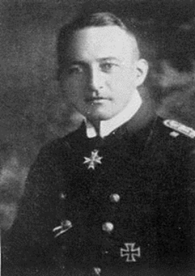
On 7th May 1915, the Lusitania was running parallel to the south coast of Ireland off the Old Head of Kinsale where, by sheer chance, she encountered the U-Boat U-20 on her way home after a successful operational tour. Not only did the Lusitania inadvertently present a full broadside target at short range, but was, following instructions from the Admiralty, running at only 15 knots.  Seeing a large ship looming ahead of him, Kapitänleutnant Walther Schwieger, who was in command of U-20, took an opportunistic chance and fired a single torpedo at 14h10.  It struck the Lusitania on the starboard side just below the bridge.  Less than a minute later a second, larger internal explosion took place amidships. Schwieger recorded in his log his surprise at how quickly the great liner began to sink, and only as she did so, with the survivors (including women and children) struggling in the water, did he see the name of the ship and realise with regret what he had done.  Contrary to the British claim that he had fired two torpedoes, Schwieger wrote in his logbook: “I couldn’t have fired another torpedo into this mass of humans desperately trying to save themselves.”

Schweiger

Kapitänleutnant Walther
Schwieger, Pour le Mérite,  EK 1
(1885-1917)  Commander, U-20.

The U-20’s log also records chaos on the decks but, fearing the imminent arrival of Royal Navy vessels, U-20 dived and proceeded to make its way home. The Royal Navy did not arrive: the cruiser, HMS Juno, which had originally been the designated escort for the Lusitania had been recalled and no replacement sent, for which no explanation has ever been forthcoming. Such rescue as did take place, was carried out by Irish fishermen from the nearby port of Queenstown (now Cobh) in rowing boats. The Lusitania sank in just 18 minutes after the torpedo had detonated. Schwieger expressed his surprise that a single torpedo could cause this, and assumed that something like coal dust must have caused the second explosion. What he could not have known was that the Lusitania had in her cargo a very substantial amount of munitions and explosive material for the manufacture of ammunition which blew the bottom out of the ship, a fact confirmed by civilian divers diving on the wreck in the early 2000s, thus accounting for its extraordinarily rapid sinking, particularly as all watertight bulkheads were closed. It has been argued that, given the structure of the ship, a single torpedo, no matter how well placed, would have required at least two hours to sink such a large ship.

The loss of life was considerable: 1 195 men, women and children. Most were British and Canadian, but of the 139 Americans on board, 128 lost their lives.  While it is presumed that most of the casualties were a result of drowning or hypothermia, some may have been as a result of the explosions.  The loss of life was exacerbated by several factors:

*   The watertight doors which were electrically operated were closed at the time. When electric power failed four minutes after the torpedo strike, many passengers were trapped;

*   The second explosion was below the First Class section where the majority of Americans were berthed;

*   There were insufficient lifeboats and not all could be a launched, especially the collapsible ones. In the end only six of the 48 lifeboats were successfully launched.

*   Accounts by survivors suggest that there was no orderly evacuation process. Some described it as ‘chaotic’.

The sinking led to outrage in the United States with pressure placed on President Woodrow Wilson to immediately declare war on Germany.  This was fanned by the British hoping to bring the US into the war on the Allied side. The idea was resisted by Wilson, who correctly sensed that the mood of the American people was not ready for war with Germany.  Largely in deference to the Americans, unrestricted submarine warfare was partially lifted, but re-imposed in 1917, when the memory of the Lusitania was again invoked as an argument for America entering the war on the Allied side. Contrary to popular mythology, the sinking of the Lusitania was not the direct reason for America’s entry. It was rather a number of accumulated factors, including financial considerations and the widespread sinking of American ships in 1917.

With the loss of the Lusitania, Britain’s propaganda machine, by far the most effective and vicious of all the belligerents rose to the occasion with intensified vilification of ‘the Hun’, accusations of a war crime, continued demonization of the Kaiser and fabrication of the most bizarre stories, such as children being given a day off school to celebrate the sinking. It was also almost immediately used as capital for military recruitment.

There was complete and official denial that the Lusitania was carrying any munitions or equipment of war, even though the cargo manifest recorded, amongst other items, 4.2 million rifle bullets.  Subsequent evidence has furthermore conclusively shown that a substantial amount of explosive material (some of it recorded on the manifesto as ‘butter’ and  ‘cheese’) and other munitions were also on board (See Lusitania Online u/d).  Only in 2014 was a partial public admission made, when the treasury put out a warning to divers and salvage operators that the wreck still contained dangerous explosives (The Guardian, 1st May 2014). Much of the documentation relating to the Lusitania remains under embargo however and the few records which are available in the UK are often missing critical pages or have sections redacted.

For examples of ammunition and explosive materials found in the wreck of the Lusitania, see https://www.google.com/search?q=Ammunition+and+explosives+on+the+Lusitania&client=firefox-b-d&source=lnms&tbm=isch&sa=X&ved=0ahUKEwjW_KGGkdzgAhU3TxUIHeCZALAQ_AUIDigB&biw=1536&bih=722&dpr=1.25       See also:   Greenhill (2008), Lusitania Online (u/d) and  Mullally (2009).

In Germany, Kaiser Wilhelm was appalled at the loss of life of so many women and children. Schwieger and his crew received no official praise for their deed and, again contrary to Allied propaganda, never received any rewards or decorations for the sinking of the Lusitania. There was in fact substantial criticism within Germany.  The German government, while regretting the loss of life, nevertheless pointed out that they had given due warning, that the Lusitania was sailing under no flag, that she was listed as an AMC, and had been ordered to ram submarines – all of which were true. Although they did not, at the time, have concrete evidence of the substantial quantity of munitions and explosive material on board, they did point out that on previous voyages the Lusitania had both carried munitions and transported Allied troops.

The wreck of the Lusitania lies in 90m of water and for various reasons, including extensive depth-charge blasting by the Royal Navy in the post-Second World War II period, is in poor condition. A Dublin-based technical diving team, who dived on the site in the 1990s, reported that there were so many holes in it that the wreck looked “like Swiss cheese”, and that the seabed around  was “littered with unexploded hedgehog depth-charges” (diver Des Quigley as reported in Sides & Sides 2009).  This suggests a concerted attempt to blow the wreck apart and destroy evidence of munitions on board or of what was in its hold. At 90m below the surface, it was certainly not a navigation hazard. No British government has ever admitted to the depth-charging.

An artist’s impressions of the wreck of the Lusitania on the seabed can be found at: https://www.irishtimes.com/news/politics/us-owner-of-lusitania-calls-for-more-flexibility-from-state-1.1785855

Video footage can be found at: https://www.youtube.com/watch?v=A7AuCXfNRdg

Among the questions which remain include why, when the British authorities were aware that a German U-boat was operating in the area, did they fail to divert the Lusitania to a safer route? There is furthermore no evidence that any warning signal was sent. Why was there no escort, even though destroyers were available in a nearby port? Why was the ship ordered to reduce speed in the war zone? How could such a big ship sink so quickly from a single torpedo strike? These questions have inevitably given rise to rumours, imaginary explanations of the events, and the blossoming of conspiracy theories.  One of the most persistent of the latter, with some circumstantial evidence and documentation to support it, and implicating Churchill himself, is that the British Government deliberately put the Lusitania at risk in order to embroil the US in the war. This point of view is advanced by, among others Patrick Beesly, a former British naval intelligence officer.

The official inquiry into the event under Lord Mersey initially saw an attempt by the Admiralty to scapegoat Captain Turner. It took the form of a report of carefully constructed falsifications and omission of facts and was a disgraceful attempt by the Admiralty to exonerate itself from culpability. Turner found himself on trial accused of deliberately disobeying Admiralty instruction, gross negligence and treasonable behaviour, by deliberately putting his ship in harm’s way, with the preposterous suggestion that he was in the pay of the Germans. Due both to Turner’s impeccable track record and to the integrity of Lord Mersey, who strongly challenged the Admiralty’s version, he was cleared of all blame, although in his own view, and many others, his reputation was blemished. He re-joined Cunard and was torpedoed a second time in 1917. In 1918 he was awarded the OBE. After the war he retired, lived a quiet life and died in 1933 aged 77. He had found it difficult to bear the public scorn over the loss of his ship and never forgave the Admiralty and particularly Churchill, not least for the latter’s persistence in reiterating the false claims of the Admiralty, and their attempts to exonerate themselves of blame at his expense.

After the furore surrounding the sinking of the Lusitania, Kaiser Wilhelm called a halt to unrestricted U-boat warfare, but this was reinstated in 1917 when Germany found itself in dire economic straits, in large measure as a consequence of the Allied naval blockade in the North Sea. Schwieger continued his career as a U-boat commander. In 1916 he accidentally ran the U-20 aground in deep fog off the Danish coast while attempting to assist anther U-boat. It could not be re-floated and was subsequently destroyed by the Germans to prevent capture. Surviving parts of the wreck, including the conning tower, are in a Danish museum. After this he was given command of U-88, and in July 1917 he was awarded the Pour le Merite, Germany’s highest award for gallantry in recognition of having sunk nearly 200 000 tons of Allied shipping. The citation did not mention the Lusitania by name. Schwieger was killed in action six weeks later aged 32, when U-88 struck a mine and was lost with all hands.  He is ranked sixth in the league of First World War U-boat aces.

Footnote: There is an interesting South African connection to the sinking. Among the passengers who succumbed was William Broderick Cloete, son of Peter Lawrence Graham Cloete and his wife Helen (née Van der Byl) of Newlands, Cape Town and at some point of Carlisle Bridge near Grahamstown in the Eastern Cape Province. Broderick, as he was known, was also the grandson of Judge Henry Cloete, who had played a major role in the British usurpation of Natal in 1842 and was subsequently British High Commissioner for the colony in 1843-1844.

Selected references and further reading

Anon   1915   ‘Sinking justified, says Dr. Dernburg’   New York Times 9th May 1915                                                                  
Bailey Thomas A   1935   ‘The Sinking of the Lusitania’   The American Historical Review 41 (1) 54–73.  October
Bailey Thomas A (September 1936). ‘German documents relating to the Lusitania’ The Journal of Modern History 8 (3) 320-337
Beesly Patrick   1982   Room 40: British naval intelligence, 1914–1918   London   Hamish Hamilton
Danver Steven (Ed)  2011  Popular controversies in world history   Volume 4 Chapter 5  pp 107-126. The URL is:  http://books.google.co.za/books?id=slVobUjdzGMC&pg=RA3-PA122&lpg=RA3-PA122&dq=U-20+logbook&source=bl&ots=FHzryeKwl7&sig=FzWvJz7-ttT-ZsnrZAKq_JIGHGk&hl=en&
Greenhill Sam   2008   ‘Secret of the Lusitania: Arms find challenges Allied claims it was solely a passenger ship’   [British] Daily Mail 20th December 2008    Available at:   https://www.dailymail.co.uk/news/article-1098904/Secret-Lusitania-Arms-challenges-Allied-claims-solely-passenger-ship.html
Hoehling Adolph & Hoehling Mary   1956/1996   Last Voyage of the Lusitania   New York   Madison Books/Rowman & Littlefield.
Kingston William   2015   ‘Ireland spent $1 million preventing research into Lusitania’   History Ireland 23 (6)   Available at:  https://www.historyireland.com/volume-23/ireland-spent-1-million-preventing-research-into-lusitania/ 
Lusitania Online   u/d   ‘A deadly cargo and the falsified manifests. Lusitania Online: The Home Port of RMS Lusitania.    URL is:   http://www.lusitania.net/deadlycargo.htm
Mersey Bigham 1st Viscount   1915   Proceedings in camera on 15thand 18thJune, 1915, at the formal investigation into the circumstances attending the foundering, on 7thMay, 1915, of the ‘Lusitania’, after being torpedoed off the Old Head of Kinsale, Ireland.   Command papers.  Cd.381 (Session 1919, Vol. XXV, p. 469). London, UK: HMSO
Mullally  Erin   2009   ‘Lusitania’s secret cargo’   Archaeology 62 (10)    Available at: https://archive.archaeology.org/0901/trenches/lusitania.html
Peeke Mitch, Jones Steven & Walsh-Johnson Kevin   2015   The Lusitania story: the atrocity that shocked the world     London   Pen and Sword Maritime
Ramsay David   2001   Lusitania: saga and myth   London   Chatham Publishing
Sides Hamptom & Sides Anne Goodwin   2009   ‘Lusitania rising’    Men’s Vogue   January  2009  [This covers a report by Dublin-based technical diver Des Quigley who dived on the wreck in the 1990s.]  To access   this article, enter , click on ‘View PDF’ and download.  See also at: http://www.vogue.com/magazine/article/lusitania-rising/

Useful websites:  

https://www.google.com/search?client=firefox-b-d&q=RMS+Lusitania

https://en.wikipedia.org/wiki/RMS_Lusitania https://www.google.com/url?sa=t&rct=j&q=&esrc=s&source=web&cd=3&ved=2ahUKEwjZmsHr7tbgAhWnBWMBHeExALAQFjACegQIBxAC&url=https%3A%2F%2Fwww.iho.int%2Fmtg_docs%2Fcom_wg%2FCSPCWG%2FCSPCWG2%2FDocuments%2FCSPCWG2- 9.3A_Wreck_symbols.doc&usg=AOvVaw3wX7FETp5F1ek1vpVtqNQn

http://www.lusitania.net/hunter.htm                                                                                   http://www.lusitania.net/turner.htm https://forum.axishistory.com//viewtopic.php?t=50394 https://en.wikipedia.org/wiki/List_of_most_successful_U-boat_commanders

https://www.google.com/search?q=The+wreck+of+the+Lusitania&client=firefox-b-d&tbm=isch&source=iu&ictx=1&fir=Gz5Q1cCB1mBcCM%253A%252CpyBkCZkAOJNjuM%252C%252Fm%252F071zvfm&usg=AI4_-kTcICJg2lvw1jxbpVchsZfrjEtYJw&sa=X&ved=2ahUKEwjH4r6ujtzgAhX5QxUIHTA-AbkQ9QEwAHoECAYQBg#imgrc=Gz5Q1cCB1mBcCM

https://www.google.com/search?q=Ammunition+from+the+Lusitania+on+the+seabed&client=firefox-b-d&tbm=isch&source=iu&ictx=1&fir=1Q2a44VWa0ag_M%253A%252C1mDwuzJwsNulcM%252C_&usg=AI4_-kTESve393kv4XrFGghO8Kc635g5lQ&sa=X&ved=2ahUKEwjg3sqOkNzgAhXRRhUIHXhcB8kQ9QEwAHoECAQQBA#imgrc=1Q2a44VWa0ag_M:

2 The Battle at Holkrantz, 6th May 1902

The battle which took place at Holkrantz (sometimes Holkrans), near Vryheid, in the early hours of 6th May 1902 remains controversial to this day. It is sometimes referred to as a ‘murder’, but is more accurately described as a major skirmish. The essence of the engagement was a pre-dawn surprise attack on 73 Boers of the Vryheid Commando under Veldkornet Jan Potgieter by 300 warriors of the abaQulusi clan of the amaZulu under Sikhobobo. 56 Boers were killed, three taken prisoner and 13 escaped. AbaQulusi losses were 52 killed and 48 wounded.

In most of the general histories of the Anglo-Boer War, the incident at Holkrantz receives little or no mention other than to state that it influenced Boer thinking in the peace negotiations under way in Vereeniging at the time. It appears to have influenced some delegates, but the overall impact is not clear. It did, however, have a major impact on the Boer farming communities in the Utrecht-Vryheid district of the Transvaal, where it is still to this day regarded by some as cold-blooded murder.

To the extent that the incident is covered in the history books, Pakenham’s two paragraphs being an example, it more often than not reflects the British or Jingoist view that the Boers had stolen abaQulusi cattle, insulted their chief, Sikhobobo (there are several different variations of these purported insults) and challenged the abaQulusi to come and get their cattle back. The latter, it is claimed, responded with alacrity and in some accounts the Boers were seen to be getting their just deserts. The most thorough and best documented examination of the incident, however, is by S J Maphalala in an article entitled ‘The Murder at Holkrantz (Mthashana) 6th May 1902’   After careful analysis of the data and available historical records, he concludes that blame for the incident lay largely with the British.

The crux of Maphalala’s argument is that not only were the abaQulusi under chief Sikhobobo part of the combined British force based in the Vryheid area, but that they had been encouraged to attack and arrest the Boers and take their cattle even though an armistice was in force. They were also armed by the British – part of the chain of events which led to the Holkrantz incident. After partially accomplishing these tasks, Sikhobobo and his men could not return to their kraals for fear of Boer reprisals and were protected in Vryheid by the British army, during which period they continued to raid farms and attack and kill isolated groups of Boers. Chief Sikhobobo and his men became known as ‘Mr Shepstone’s Commando’ due to being aided and abetted by A.J. Shepstone, the British appointed Magistrate of Vryheid.

General Louis Botha then instructed that Sikhobobo’s kraals were to be burnt with a view to placing the burden of responsibility and care for the wives and children of the abaQulusi on the British, and because some of the women were suspected of providing the British with information on Boer movements. Maphalala emphasises that the Boers allowed the women to take enough food with them to reach the British lines 15km away before burning the kraals. Homes in which there were sick or infirm individuals were not burnt and on occasion the Boers accompanied the women to Vryheid to ensure their safety. All Sikhobobo’s cattle were confiscated.

On 5th May Shepstone, having ascertained from spies the position of the Boers at Holkrantz, ordered Sikhobobo to attack them. This they did at 04h00 on 6th May, employing the traditional three-pronged amaZulu battle formation. The Boer commandos did not expect an attack from the British as an armistice was in force and so they were caught almost completely unawares. Some managed to fight their way out, but most were surrounded and killed. After the incident, a British commission of enquiry was convened and, after ignoring most of the crucial facts – not surprising given the sentiments of the time – concluded that the Boers had been killed because they had been ill-treating the amaZulu and thus brought reprisals upon themselves.

In conclusion, Maphalala notes that the attack was on the instructions of Magistrate Shepstone; that the British army should have prevented the attack; and that relationships between the amaZulu and the Boers had been relatively good prior to British interference. He makes no mention of any insults. The Boers themselves refuted that any ill treatment or attacks on their women by the amaZulu had taken place while the men were away on commando. Maphalala concludes that the abaQulusi were merely carrying out British orders at Holkrantz.

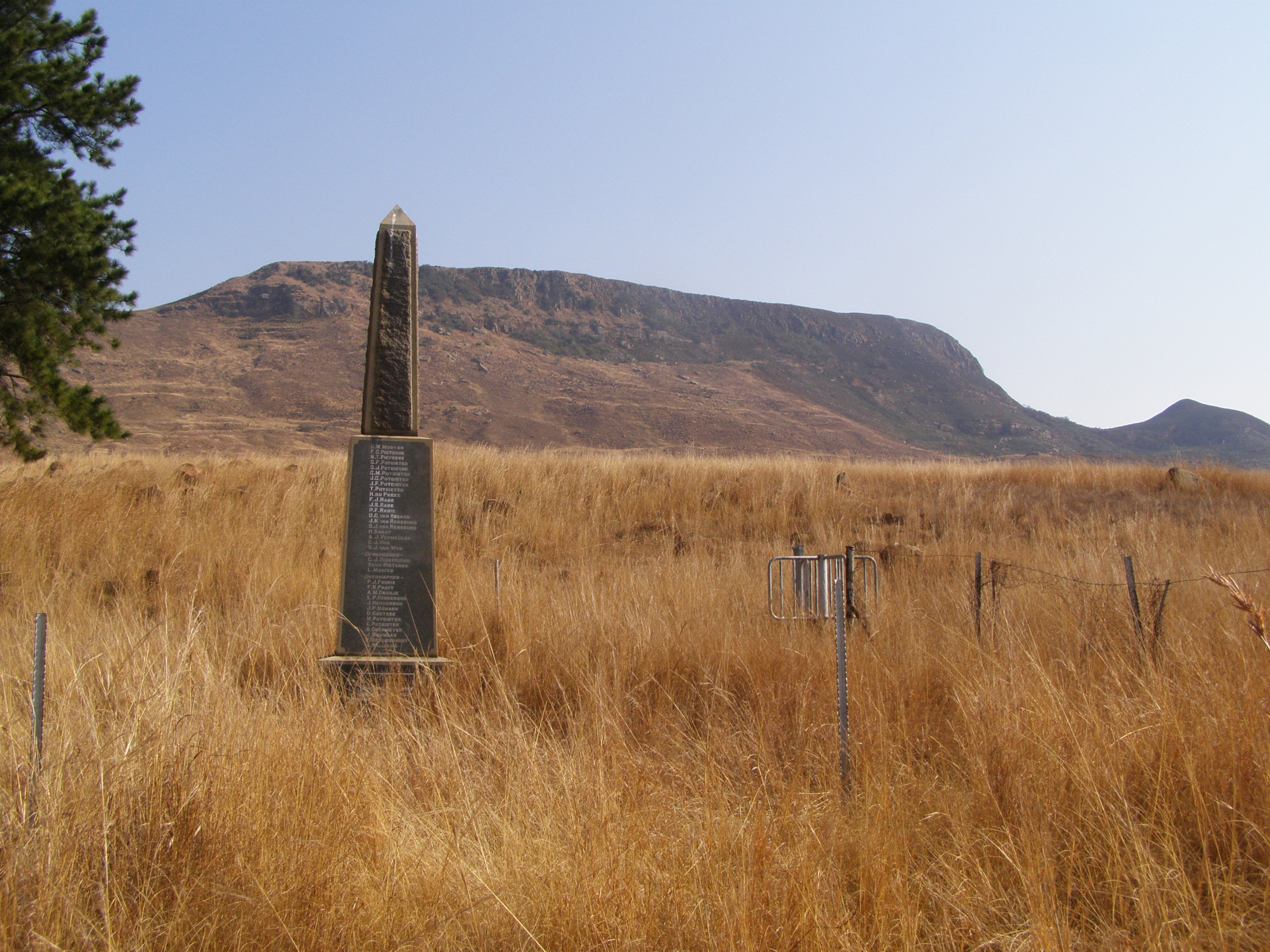
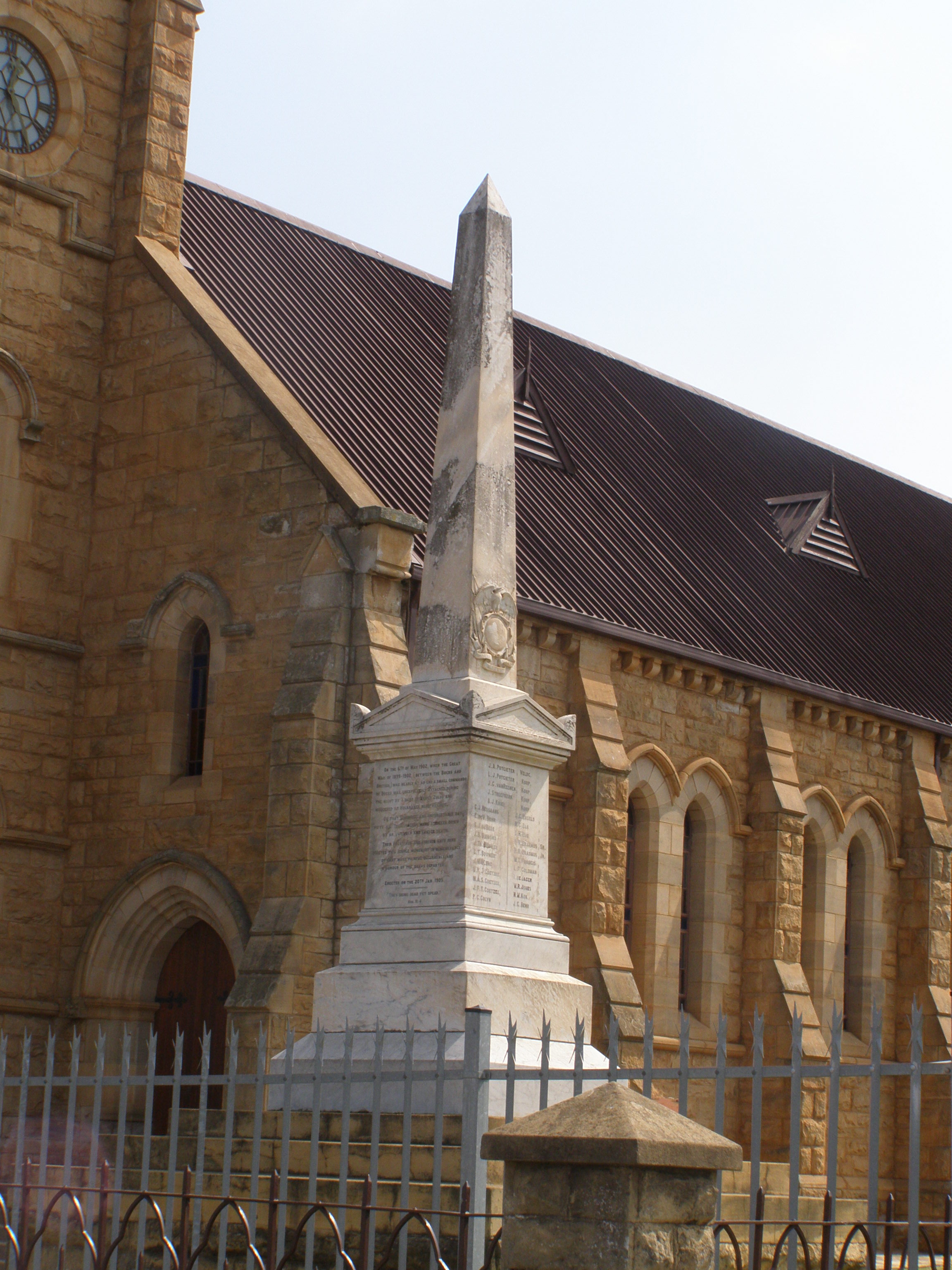
A monument to the Boers stands on the hill above the place where they were attacked and where the last of them retreated to.  There is also a memorial plinth in the precincts of the NG Kerk (Dutch Reformed Church) in the nearby town of Vryheid, where many of the commando members would have regularly worshiped. No monuments have been erected to the abaQulisi who died in the incident.

Key reference:
Maphalala SJ  1977  ‘The Murder at Holkrantz (Mthashana) 6th May 1902’  Historia 22 (1) 41-46.    This is the most balanced and best documented account of the event.

Some other references reflecting different viewpoints including the ‘jingo’perspective:
Hendey Brett    The Battle of Holkrans    http://www.angloboerwar.com/forum/8-events/177-the-battle-of- holkrans
Minnaar A de V   1989   ‘Zululand and the Anglo-Boer War (1899 – 1902)’   Military History Journal 8 (1) 14 – 20   June  [see Holkrans on p19]
Pakenham Thomas   1979   The Boer War   Jonathan Ball   Johannesburg  p 567
Thompson P S   1994   ‘Isandlwana to Mome: Zulu experience in overt resistance to colonial rule’   Soldiers of the Queen 77: 11 – 15   June
Von der Heide Nicki   2013   Field guide to the battlefields of South Africa   Cape Town   Random House  Struik   pp 178 – 179                                                                                                                          Wessels Elria   2002   ‘Die moord by Holkrans 6 Mei 1902’    Veldslae: Anglo-Boereoorlog 1899 – 1902   Pretoria   Lapa Uitgewers  [See Chapter 71 pp 29301]

The site of the battle: A view from the top of the hill where the battlefield monument is located.


The monument on the hill above the battlefield.  The names recorded are the same as those at the NG Kerk in the town of Vryheid.


The memorial plinth in the precincts of the Vryheid NG Kerk  (Dutch Reformed Church).

The historic perspective on the plinth.

The names of the 56 Boers who died as recorded on the plinth.

The plaque commemorating those Boers who escaped or were captured. Only 13 of the 14 said to have escaped are listed.

1 An overview of the East Cape Frontier Wars

This topic is offered as an introduction and overview to some of the forthcoming entries which will deal with forts and fortifications in the Eastern Cape.

The eastern Cape has been an area of known military conflict from the time that the amaNguni people moved into the area, probably in the 16th and 17th centuries and possibly long before that, involving Khoi and Khoisan groups. From what little is known militarily of this early amaNguni period, it was confined largely to disputes between clans, these often relating to succession disagreements, promises not kept and cattle raiding as a lifestyle activity. Warfare as such was to a large degree ritualised and casualties, with a few notable exceptions such as the Battle of Amalinde in 1818, were relatively few. From the late 18th century however things began to change as Dutch-speaking stock farmers (known as Trekboere or itinerant farmers), expanding north-eastwards in search of pasture and grazing, came into contact with the south-westerly movement of the amaNguni pastoralists and, later, refugees from the mfecane*.  Despite trading opportunities, competition for grazing, mutual cattle lifting and a clash of values between the two polities increasingly led to armed conflict.

* The mfecane / dificane / lifekane was a period between approximately 1815 and 1840 characterised by military, social and political disturbances, uprooting and sometimes annihilation of traditional clans as an indirect result of Zulu expansionism in the Eastern part of South Africa during the reign of iShaka kaSenzangakhona (c 1787 -1828). It had a knock-on effect which reverberated throughout southern Africa.

The general area and its shifting boundaries where this took place is referred to in an historical context as ‘the East Cape Frontier’ (Figures 1 and 2). It initially stretched from roughly the Gamtoos River, south-west of Port Elizabeth, to the Great Kei River some 360km to the north-east although it was not confined to these geographical boundaries, fighting also taking place up to 150km inland from the coast and as far west as George. Most of the military activity, involving invasion and counter-invasion, took place in this area over the 99-year period between 1779 and 1878.  There were nine ‘peaks’ of fighting in which major incursions, widespread killing, looting and destruction took place over both sides of wherever the ‘frontier’ was at the time. These are what are generally referred to as the ‘East Cape Frontier Wars’. The dates during which they occurred are indicated below. In between these periods of intense conflict, there was a more or less continuous pattern of livestock rustling with raids and counter raids by all sides as well as considerable loss of life.

While the wars were sometimes triggered by a specific incident, such as the theft of an axe in Fort Beaufort in 1846, or the squabble at a wedding party in 1877, they were more generally the culmination of a series of incidents. They, and the lower level interwar conflicts, were in essence over livestock, especially cattle, and the land to graze them on. Cattle, as wealth, cultural goods and currency, constituted part of the social fabric of all the amaNguni clans as well as the trekboere and some of the British settlers who arrived in 1820. The net result was a north-eastwards movement of the frontier, with the concomitant dispossession of land which the amaNguni had previously regarded as their own.

Figure 1   The general area in which the East Cape Frontier Wars took place between 1779 and 1878.  Source: Pat Irwin

The frontier, and the wars associated with it, was also a kaleidoscope of constantly changing alliances over this period. Far from being a simple ‘black vs. white’ confrontation as nationalists of all stripes (including the immediate past and the present regimes) like to argue, the reality was different. It was rather one of complex social, economic and political relationships exacerbated by broken promises; constantly vacillating colonial policy; avarice for cattle as the primary sources of wealth and status, and hence the land to graze them on; the tradition and thrill of cattle raiding; and often rank opportunism. The amaNdlambe, for example, confronted the Colony for most of the period while the amaMfengu (‘Fingos’) a conglomerate refugee group from the mfecane in the east of the country allied themselves both politically and militarily to the British from 1836 onwards — effectively from the Sixth to the Ninth Frontier Wars. Other groups, such as the amaNgqika and the amaGqunukhwebe (mixed Khoi/amaNguni chiefdoms), remained militarily neutral or changed sides according to the needs of the situation and the pressures they felt, as they saw it at the time. Over the period 1806 – 1879 almost every group was in conflict with every other at some point. To add to the mix, until the mid-19th century a significant proportion of the British Army in South Africa was composed of indigenous Khoi troops. (At the time, and in historical writings they were referred to as Hottentot troops after a name given to them by the early Dutch settlers.)

Figure 2   A contemporary map of the Eastern Frontier in 1860.  Original source unknown.  Common Domain.

The ‘amaXhosa’, as most of the clans of the time today refer to themselves, were not at that stage a ‘united nation’ but rather a collection of semi-independent isiXhosa-speaking clans who lived and fought as such. They generally owed primary allegiance to their clan. As with any social structure of this nature, there were mutual antagonisms and alliances, both often temporary, and frequently resulting in raiding for cattle. Moving on to land previously occupied by Khoi/Khoisan, they were also colonists in their own right. Parallel to this loose grouping were colonists of European origin, initially trekboere, some of whom settled semi-permanently and, after 1806, British military forces, as well as significant numbers of British settlers entering the colony in 1820 and the years following. There was likewise often mutual antagonism between these groups. To all these constituents could be added a volatile  mix of missionaries, prophets, army deserters (who sometimes linked up with one or more of the clans) profiteering and unethical traders, refugees from other conflicts, hunters and arms smugglers – the latter’s activities ensuring that access to firearms was spread gradually over the entire region.

The frontier however, moved inexorably eastwards as the isiXhosa-speaking clans lost more and more of the land which they had earlier colonised, now regarded as their own and had had free access to. In the end this shared perception of dispossession probably contributed significantly to an emerging sense of amaXhosa nationhood.  The building and subsequent abandonment of fortifications, a topic to be covered later, was also reflected in the eastward shifting of the frontier.

The First Frontier War (1779 -1781) consisted of a series of cattle raids, punitive expeditions and skirmishes between the trekboere and a number of the smaller clans: the imiDange, imiNtinde, amaMbalu and amaGwali.

The Second Frontier War (1789 -1793) involved trekboere who invaded the Zuurveld  occupied by the amaGqunukhwebe.  At the time, the trekboere were temporarily allied to the amaNdlambe who like all other groups coveted the summer grazing opportunities offered by the Zuurveld. This situation was compounded by internal struggles among amaNguni clans (especially between the amaNdlambe and the amaNgqika who were in a succession struggle) and between the trekboere of the Graaff-Reinet district and the Dutch East India Company, which nominally ruled the Cape, in 1795.

As a sideshow to the Revolutionary and Napoleonic wars, which were taking place in Europe in the late 18th and early 19th century, the British invaded and occupied the Cape from 1795 to 1803 after which they returned it to Dutch rule in the shape of the Batavian Republic. The British again invaded it in 1806 and thereafter occupied it permanently until 1914. As they consolidated their occupation they found they had inherited an ongoing problem of border clashes on the eastern frontier of the colony.  These clashes which had hitherto been primarily between the Dutch trekboere and some of the amaNguni, now increasingly involved the British with their self-imposed obligations to ‘keep the peace’ and protect all parties from each other. The trekboere and some of the amaNguni clans had first met in the approximate area of the Great Fish River and among the early actions of the new British administration was the proclamation of the Fish River as the border between them.

The Third Frontier War (1799 -1803) saw the first involvement of the British Army, ranged against a second rebellion of trekboere in the Graaff-Reinet district (the first having been against Dutch rule), the amaGqunukhwebe and the Khoi, these latter two mainly in that part of the frontier known as the Zuurveld, but also beyond, as far as Oudtshoorn. A tenuous peace was reached before the British departure from the Cape in 1803.

During the Fourth Frontier War, which erupted in 1811, Lieutenant-Colonel John Graham, Commanding Officer of the Cape Regiment, composed largely of high quality Khoi troops recruited by the British, was appointed by Governor John Cradock to relocate the Xhosa-speaking clans who had grossed to the west side of the Fish River, to the east of it. These were mainly the amaNdlambe but also some minor clans such as the imiDange and the amaGwali, all of whom had only relatively recently occupied the area known as the Zuurveld. The amaNdlambe resisted. “The land”, in the words of Chief Ndlambe himself, “is mine by right of conquest”. These actions, known as the ‘Zuurveld clearances’, are controversial to this day and have become something of an opportunistic political football at the turn of the 21st century.

Figure 3   Lt Col John Graham, founder of Grahamstown. After taking part in the 1806 British invasion of the Cape, he became the Commanding Officer of the Cape Regiment, composed almost entirely of Khoi troops, for whom he had a very high regard. As the officer in charge of the Zuurveld clearances on 1812 he has in some quarters, and for purely political and ideological reasons, been demonised for the role he is purported to have played. A fairer view of him in the context of the times suggests however, that apart from being a competent military commander, liked by his men, he was an intelligent and compassionate man.  Source: Common Domain.


Graham was also given the task of surveying the frontier for the location of a series of fortifications. Needing a place for a military headquarters he, in 1812, chose the site of an abandoned farm ‘De Rietfontein’* on which he established the town which was to bear his name by proclamation of the then Governor, Sir John Cradock.  A small village, which was to grow into the city of Grahamstown, slowly emerged around the military camp.

*   There is some controversy around this which will be dealt with in a future posting.

From this time onwards there developed a network of about forty fortified places along or in the general vicinity of the Fish River, the structures varying from forts to observation posts to fortified farm houses. The purpose of the forts was specifically declared by the Governor of the day, Lord Charles Somerset, to be primarily for observation and early warning of any enemy approaches. They were not, he declared, to be for aggressive purposes, but to curtail the actions of warriors raiding across the Fish River.

The Fifth Frontier War (1818 -1819) also known as ‘Makana’s War’ was mainly between the amaNdlambe clan and some minor allies on the one hand, and the British army, with a large proportion of Khoi troops, and trekboer commandos on the other. Following their heavy defeat by the amaNdlambe at the Battle of Amalinde in 1818 (possibly the largest battle ever fought in southern Africa) the amaNgqika had sought protection, and an alliance, with the British. The amaGqunukhwebe, previous antagonists of the British, remained neutral.

Flush with their victory over the amaNgqika, the amaNdlambe led by the prophet Makana (also variously called Nxele, Makhanda and ‘Links’), with some 6 000 warriors under his command, attacked the embryo village of Grahamstown on 22ndApril 1819, but against all odds were defeated by a determined defence of the settlement by 333 men, and a small number of women, under the military command of Colonel Thomas Willshire.  Apart from poor military judgement on the part of Makana, technically superior weaponry played a role. This event has subsequently become known as the ‘Battle of Grahamstown’ and was the first set piece battle of the frontier wars. Despite its relatively small scale, the battle was politically decisive for both sides. *

*    There is a common misconception that Colonel John Graham was present at the Battle. He was not and at the time was Commandant of the Simon’s Town Naval base.

It was followed by devastatingly punitive raids across the Fish River until the amaNdlambe surrendered. Makana, who had given himself up to the British near Trompetter’s Drift on the Great Fish River in August 1819 in the hope that it would bring about peace, rapidly found himself incarcerated on Robben Island. He drowned attempting to escape later in that year. In his banishment to an isolated island, Makana kept historical company with many defeated military opponents of the British including Napoleon and later, many clan chiefs of the amaXhosa.

Although the amaNgqika had initially not actively participated in the war, they joined the British in the reprisals and cattle acquisition subsequent to the battle at Grahamstown, driving their erstwhile enemies, the amaNdlambe, eastwards. The decisive British military victory at Grahamstown also allowed for the influx of the 1820 British Settlers, permanently changing the social, political and physical landscape of the eastern Cape.* Had the battle gone the other way, the 1820 Settler scheme would almost certainly have been abandoned and South Africa would probably have been a very different place today.

*    It is significant to note however that the 1820 British Settlers were not sent to the Cape as a result of the Battle of Grahamstown, but that the movement and arrangements were already in place in 1818, well before the battle. The outcome of the battle merely facilitated their arrival and placement.

The sudden and unexpected irruption of the Sixth Frontier War (1834 -1836), also called ‘Hintsa’s War’, came as a great shock to the British settlers who had arrived in the eastern Cape Colony from 1820 onwards with promises from the British government of a new life of relative prosperity. As a result of border friction, an estimated 12 000 warriors were mobilised to invade the Cape Colony which led to widespread devastation, burning of farms and carrying off of cattle. Grahamstown’s Church Square was transformed into a protected laager incorporating the then St George’s Church which had been completed in 1830. The major antagonists were an amaNgqika/amaGcaleka alliance in opposition to the British and the colonists to whom the amaGqunukhwebe had allied themselves. Several other clans remained neutral. It was also at this time that the amaMfengu allied themselves with the British and the Cape Colony.  After the Sixth Frontier War large numbers of Trekboere emigrated from the eastern Cape frontier area to the interior of South Africa, in a movement which has come to be known as the Great Trek. More on this will follow in later postings.

The Seventh Frontier War (1846 -1847), was initiated by the British although evidence suggests that all the antagonists were agitating for it. It was widely welcomed by the colonists and their amaMfengu allies, where the purpose in invading ‘Nqgikaland’ was proffered as ‘bringing its people under the Dominion of Law’. Also called the ‘War of the Axe’, it was sparked off by the theft of an axe from a shop in Fort Beaufort and the sequence of events which followed.  With initial military successes by the amaNgqika, this time allied to the amaGqunukhwebe’, many British positions and posts were overrun or abandoned, including the chain of signal towers (to be covered in a later posting) which had been erected at considerable cost, while other posts and fortified farmhouses were isolated or besieged. Once again streets in Grahamstown were barricaded. Eventually however, with far greater access to resources and technically more advanced weaponry, British and colonial forces under command of Sir Harry Smith prevailed. The net result of the war was that all participants suffered severe disruption and destruction of their economic infrastructure and their livelihoods.

The Eighth Frontier War (1850 -1853), the ‘War of Mlanjeni’*, was fought between the British army and the colonists, supported by the amaMfengu, some of the amaNdlambe sub-clans and some of the Khoi. Their opponents were an amaNguni alliance led by the amaNgqika supported by the amaGcaleka in the east as well as the amaThembu in the north-east part of the Frontier who joined the fray for the first time. It started on Christmas day 1850 with co-ordinated attacks upon the military villages established by Sir Harry Smith. Most were destroyed and their inhabitants killed. Farms were attacked and burned and people in the countryside either fled en masse to Grahamstown for sanctuary or formed laagers to defend themselves. Smith, the governor of the Colony was himself besieged in Fort Cox for six days.  The initially successful invasion of the colony by the amaNgqika alliance was compounded by the defection to their side by many of the British Khoi troops, due to accumulated grievances and perceived unfair treatment.

*   Mlanjeni was another prophet to aid and abet in bringing disaster upon his people in that he preached for a war that could not be won against the overpowering might of the British and their allies.  

Much of the cause of the war can be laid at the door of vacillating British policy and inept administration and the tensions and antagonisms which built up from these.  In the longer run however, despite the guerrilla successes of Maqoma (an amaNgqika chief) in the Waterkloof Mountains, the superior resources which the British could muster, as well as their scorched earth policy in the amaNguni homeland, forced the clans to sue for peace in 1853. The economic impact for the rest of the colony beyond the frontier and the land to the east of the Fish and Kei rivers, was extremely severe. This is widely regarded as the most destructive and economically devastating of all the Frontier Wars.

Between the Eighth and Ninth Frontier Wars, a disastrous event known as the Cattle Killing took place among some of the isiXhosa-speaking clans in late 1856 and 1857. A young prophetess known as Nongquase, supported by several other ‘seers’ preached that the amaXhosa peoples would be restored to their former glory and ascendancy by the ancestors if they killed all their cattle and livestock. While many chiefs and missionary-educated individuals opposed this, sufficient numbers supported it to result in a massive famine when the promised events failed to materialise.

The Ninth Frontier War (3/8/1877-2/7/1878) also known as ‘Ngcayechibi’s War’ or the ‘War of the Mfengu-Gcaleka’  broke out as a result of simmering tensions between the amaMfengu and the amaGcaleka which came to a head at a wedding party. The British rallied to the support of their long time amaMfengu allies and were joined by the amaThembu and elements of the amaGqunukhwebe, while the amaNgqika sided with the amaGcaleka.  By February 1878 the amaGcaleka having suffered military defeat, surrendered. The amaNgqika however fought on until July 1878 when due to overwhelming British military power, they too were defeated and then expelled across the Kei River to live among the amaGqaleka. This final armed confrontation in a 99-year conflict had lasted 11 months.

As a final point we might reflect on colonisation in its various forms, as an age-old phenomenon – literally from the beginning of human social interaction. While it is, from the perspective of our current values sometimes seen as a heartless and dispossessing process, it has also been a means of transferring and sharing technology (in our context ranging from clothing to cell phones) and one in which values and traditions on all sides are challenged. We need to take a long term historical perspective, not to justify, but to understand socially, economically, politically and psychologically why such processes occur at all.  Colonisation has nearly always led to resistance from those being colonised and often dispossessed of their resources and values. Such was the case for example in the Roman conquest of Britain and in just about every country in Europe, Asia and the Americas. There are countless examples in history.

The amaXhosa people are no exception in this regard nor, by a long mark, and despite claims to the contrary, have they suffered worse than other colonised peoples. In reality, while there have inevitably been what could be considered negative, exploitative or even destructive practices within the colonisation process, much of the technology, social, economic and even political transfer which has taken place has been overwhelmingly beneficial to both colonised and coloniser. And so it has been throughout the ages despite justifiable opposition and resistance in the early stages of the process.  

 Selected references

There is a great deal of writing on the East Cape Frontier Wars but much of it is either superficial or has a distinct political agenda. The most balanced and considered overview is John Milton’s 1983 The Edges of War: A history of Frontier Wars (1702-1878) published by Juta & Co. of Cape Town.  It is regrettably out of print but is still widely available in libraries and at second hand book shops.  Jeff Peires’ The House of Phalo’ published by Ravan Press in 1981 is another excellent source. Regrettably the same cannot be said of Noel Mostert’s Frontiers. There are also many interesting primary accounts of these years of conflict. A few examples are PPJ Coetser’s Gebeurtenisse uit die Kaffer Oorloge van 1834,1835,1846.1850 tot 1853 published in 1897; Buck Adams’ (1884) The narrative of Private Buck Adams, 7th (Princess Royal’s) Dragoon Guards  on the Eastern Frontier of the Cape of Good Hope 1843 – 1848,  published by the Van Riebeeck Society in 1941; John Shipp’s  Memoirs of the extraordinary military career of John Shipp, late a Lieut. in his Majesty’s 87th Regiment published in 1832; and Isaiah Staples’ Narrative of the Eighth Frontier War of 1851-1853 – a reprint published by the State library in 1974.

There is also much official and military documentation, but these too need to be seen within the contexts and values of their times, as well as the political and ideological agendas which they propagated. Almost all of the contemporary writings are from a colonial or missionary perspective each with their biases. It is a matter of great regret to military historians that there are no first-hand accounts of the conflicts from an amaNguni perspective. Current claims and accounts of events from purported oral history sources need to be viewed with the greatest circumspection.  Much of what is on the Internet is also inaccurate and of dodgy provenance: all too often the articles appear to have been compiled by individuals who have not visited the sites described nor consulted much in the way of primary material. Even more problematic are those who tend to start with preconceived conclusions and selectively seek material to support them.

Figure 4   The hamlet of Grahamstown in 1822, three years after the battle which was fought to the right (east) of the picture.  The painting shows the axis of the modern High Street: the small St George’s Church can be seen on the extreme right. The single storey building at centre left is possibly the original gaol which still stands in High Street.   Watercolour by ‘An Officer’.   The painting is owned by the Albany Museum in Grahamstown and is in the Common Domain on the Internet.